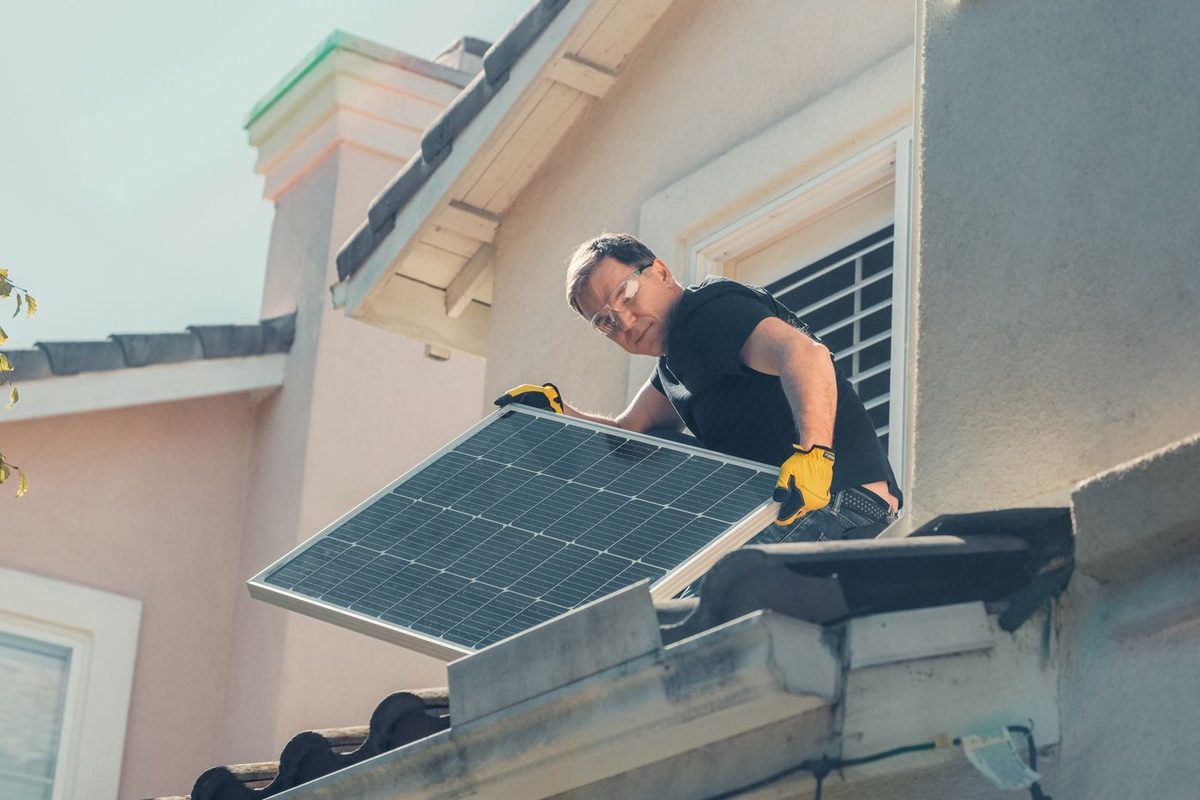
Start with the roof, not the panels
A solar array is expected to sit in place for a long time, so the surface beneath it has to be sound. Check the age and condition of the covering, the state of flashings around penetrations, and whether the structure can carry the additional load.
If the roof is nearing the end of its life, replace it first. Removing and refitting an array to renew a roof underneath is avoidable cost and disruption.
Orientation, pitch and shade
Panels perform best with good sun exposure across the middle of the day and minimal shade. Chimneys, dormers, trees and neighbouring buildings all matter, and shade in winter can be worse than in summer.
A shade survey is worth the effort. Where shade is unavoidable, plan around it — different panel placement, micro-inverters, or simply a smaller, better-positioned array rather than maximum coverage.
The electrical picture
The array needs a route for cabling to an inverter location and then to your consumer unit. That route should be short, accessible and, where possible, inside the thermal envelope.
If your electrical installation is old, upgrade it before connecting generation. Ventilation for the inverter matters too — a cupboard with no airflow shortens its working life.
Sequence it with other upgrades
Solar is rarely a stand-alone project. If you are also planning a roofing upgrade, a loft conversion, new windows or insulation work, coordinate them. Insulation and glazing reduce demand; solar reduces what you draw from the grid. Doing them in the right order makes each one more effective.
- Roof condition and remaining life confirmed
- Structure checked for additional load
- Shade survey completed across seasons
- Cable route and inverter position agreed
- Electrical installation assessed and upgraded if needed
What to agree in writing
Ask for the equipment specification, the expected generation figures and the assumptions behind them, how monitoring works, what happens to the system if you sell the house, and what the workmanship and product warranties cover.
Read the warranty for what it excludes, not what it promises. That is where the real terms live.
Key takeaways
- Confirm roof condition and remaining life before anything is installed.
- Check structural capacity, and replace a failing roof first.
- Run a shade survey, including winter conditions, before finalising layout.
- Plan the cable route and inverter position early, with ventilation.
- Get specifications, generation assumptions and warranty exclusions in writing.
If you take one thing from this article: plan the sequence before you choose the finish. Almost every renovation regret traces back to that order.